Garudasana (Eagle Pose)

Mythology of Garudasana
The Sanskrit word Garuda means eagle, the powerful mythical bird who serves as the sacred vehicle (vahana) of Lord Vishnu.
According to Hindu mythology, Garuda was born with immense strength, courage, and devotion. His mother, Vinata, had become enslaved, and Garuda vowed to free her. To rescue her, he journeyed through great dangers to obtain the nectar of immortality from the gods. Through determination, intelligence, and unwavering focus, Garuda succeeded and became a symbol of freedom, bravery, and higher vision.
Garudasana reflects the eagle’s qualities:
focused concentration
strength with lightness
grounded power with expansive awareness
The entwining arms and legs symbolize life’s complexities and obstacles, while the lifted chest and focused gaze remind us that clarity and balance can still be found within challenge.
How to Do Garudasana (Eagle Pose)
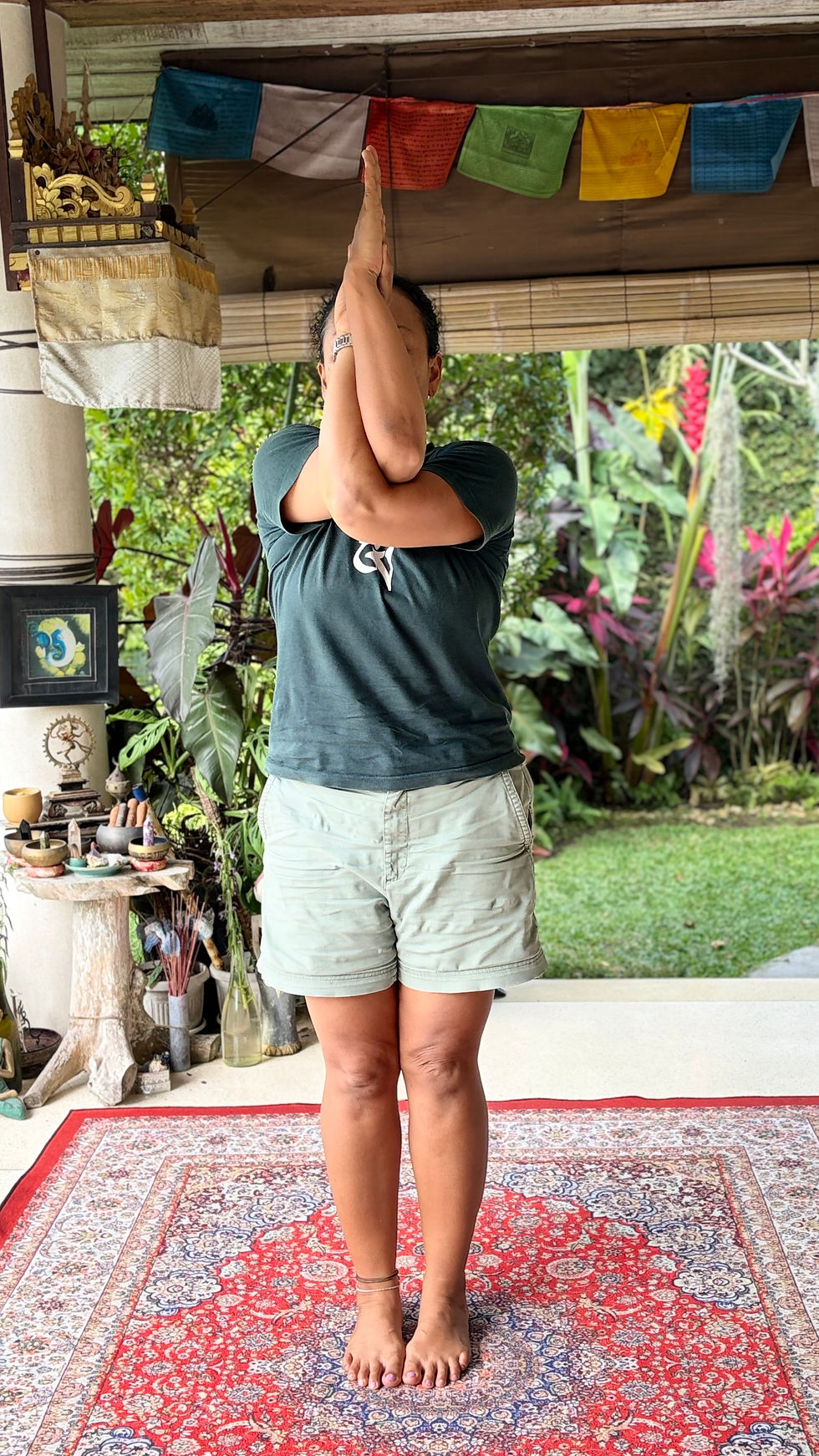
Begin in Tadasana (Mountain Pose).
Slightly bend the knees and shift weight into the left foot.
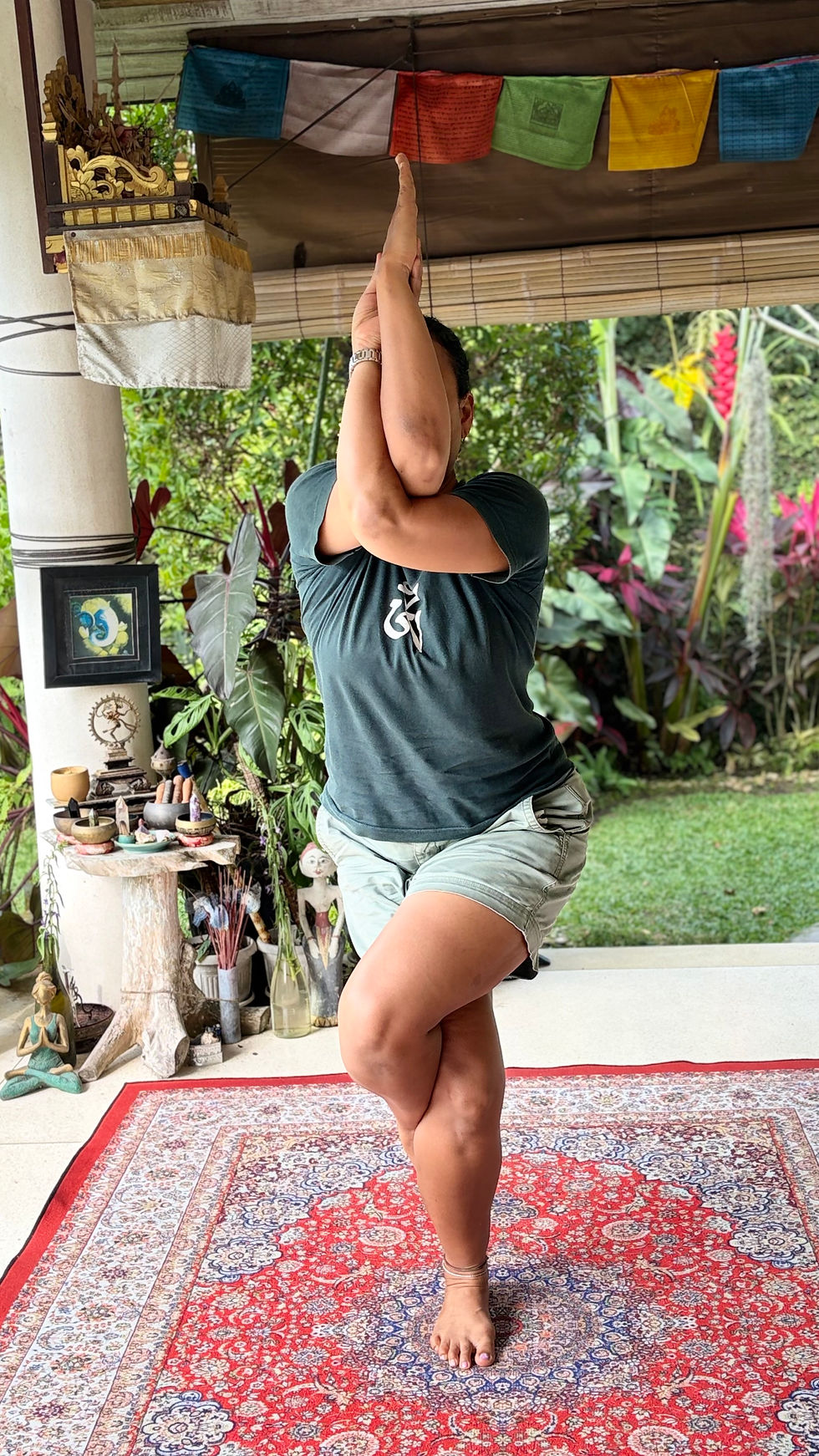
Cross the right thigh over the left thigh. If possible, hook the right foot behind the left calf.
Extend the arms forward and cross the left arm over the right at the elbows.
Bend elbows and bring palms together (or backs of hands together).
Lift the elbows slightly while relaxing the shoulders down.
Keep the spine tall, hips squared, and gaze focused on one point.
Hold for 5–8 breaths, then gently release and repeat on the other side.
Variations of Eagle Pose

1. Beginner Eagle
Keep the toes of the lifted leg on the floor like a kickstand for balance support.
2. Eagle Arms Only
Practice just the arm position while seated or standing to stretch shoulders and upper back.
3. Reclined Eagle
Lie on the back and wrap arms and legs gently for a restorative variation.
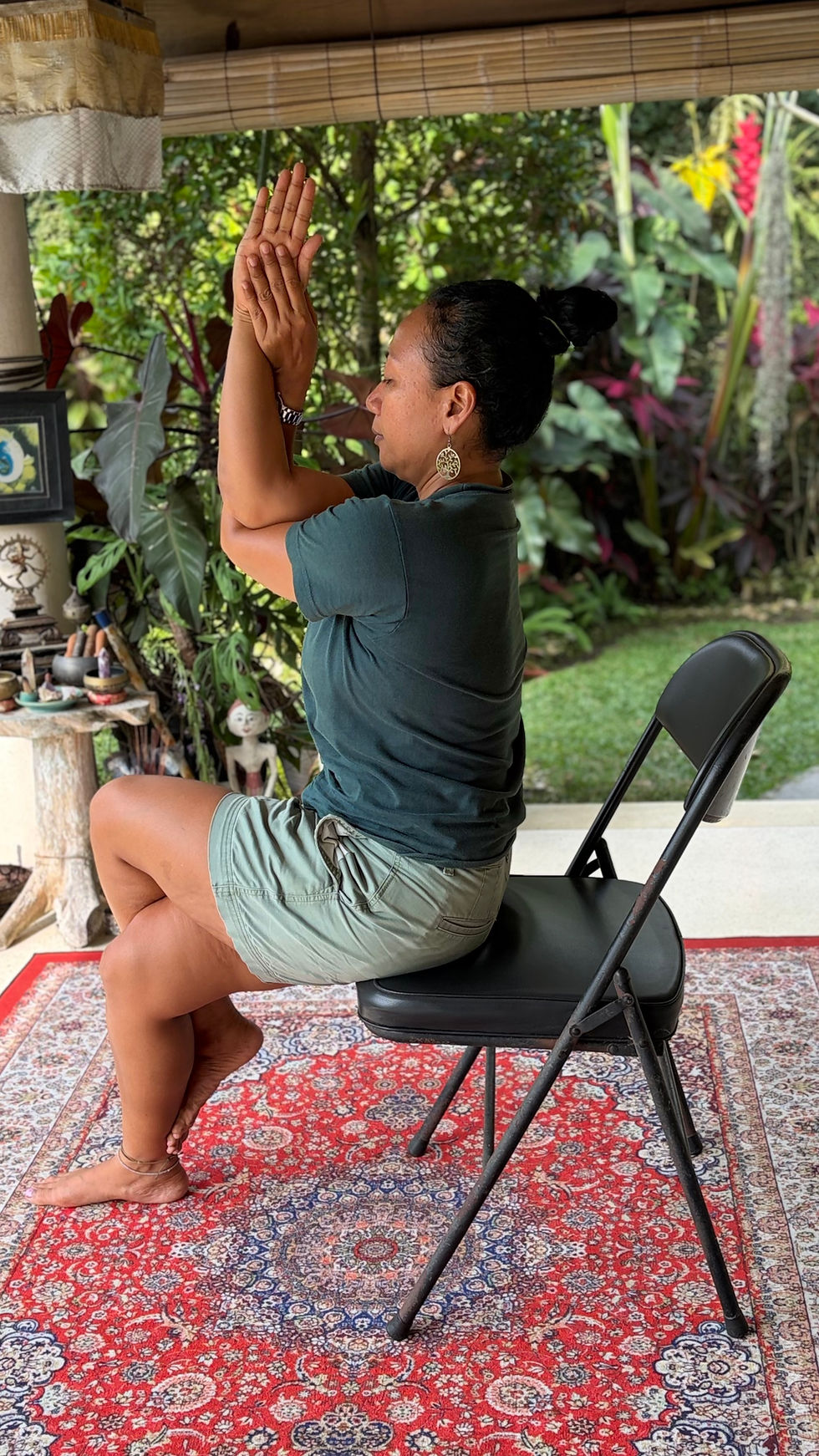
4. Chair Eagle Pose
Sit in a chair and perform the leg and arm wraps while supported.
5. Forward Fold Eagle
From full Eagle Pose, hinge slightly forward for deeper hip and core engagement.
Benefits of Garudasana

Improves balance and coordination
Strengthens the legs, ankles, and core
Stretches the shoulders, upper back, and hips
Enhances concentration and mental focus
Encourages healthy joint mobility
Improves circulation through gentle compression and release
Helps release tension stored in shoulders and upper back
Disclaimer
Avoid deep knee wrapping if you have knee injuries or instability.
People with ankle issues should modify the balancing leg position.
If shoulders are tight, keep backs of hands together instead of forcing palms to meet.
Practice near a wall if balance feels difficult.
Move slowly and mindfully to avoid strain in the joints.
Relationship of This Posture to Well-Being
Garudasana teaches us how to stay centered even when life feels tangled or complicated. Like the eagle soaring high above the world, this posture reminds us to rise above distractions and focus clearly on what truly matters. It cultivates patience, concentration, emotional balance, and inner steadiness, qualities that support overall well-being both on and off the mat.
Affirmation for Garudasana
I rise above challenges with courage, clarity, and grace. My vision is steady, and my heart is free

Closing Thought
Garudasana teaches us that even when life feels tangled, a calm mind, a focused heart, and unwavering courage can lift us above every obstacle.


Comments