Janu Sirsasana | Head-to-Knee Pose
- Yoga Ria Bali
- Jan 14
- 2 min read

Mythology of Janu Sirsasana

Although Janu Sirsasana does not come from a specific myth, it is deeply connected to the symbolism of bowing inward in yogic tradition. The posture resembles a devotee bowing before a sacred flame or offering reverence to the divine.
This gesture of bowing the head toward the knee is associated with the ancient yogic practice of pratyahara—the turning inward of the senses. It reflects humility, introspection, and surrender, just as sages in ancient India would sit in deep contemplation by rivers, in forests, or in caves.
The asymmetrical shape of the posture also symbolizes the union of opposites—the active leg root and the soft, surrendering fold—mirroring the balance of effort (tapas) and ease (sukha), a fundamental theme in yogic philosophy.
Relationship of This Posture to Well-Being

Janu Sirsasana teaches us to slow down, soften, and listen inwardly. Just as the body folds toward the extended leg in humility, the mind learns to release tension and surrender to the present moment. It encourages patience, introspection, and a deeper connection with oneself—qualities that nourish emotional and mental well-being.
How to Do Janu Sirsasana
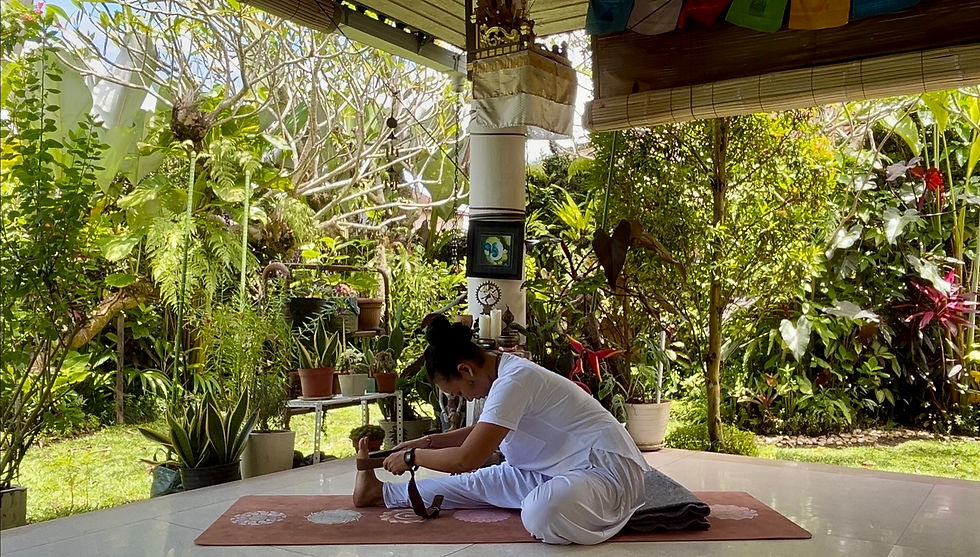
Sit in Dandasana (Staff Pose) with legs extended forward and spine tall.
Bend the Right Knee, placing the right foot against the inner left thigh. Let the knee fall outward.
Inhale and Lengthen the Spine, reaching the arms up.
Exhale and Fold Forward over the extended leg, hinging from the hips.
Hands Reach Forward, holding the shin, ankle, or foot wherever comfortable.
Keep the Spine Long, avoiding rounding excessively.
Stay for 5–10 breaths, softening deeper with each exhalation.
Repeat on the Other Side.

Variations of Janu Sirsasana
Supported Forward Fold: Place a bolster or pillow on the extended leg and rest the chest or forehead on it.
Strap Assist: Use a yoga strap around the foot to maintain length in the spine without straining.
Reclined Janu Sirsasana: Lie back with one leg bent to the side—helpful for those with back pain or tight hamstrings.
Blanket or bolster : : Use this props place under the extended led, to assist if your hamstring isnt happy
Block Assist : to support your bend knee, place under the knee to assist if your hips isnt happy
Benefits of Janu Sirsasana

Stretches the Hamstrings and Hips
Lengthens the Spine and Calms the Nervous System
Stimulates the Liver and Kidneys
Improves Digestion through gentle abdominal compression
Supports Emotional Release by encouraging introspection
Enhances Circulation in the pelvis and lower back
Relieves Stress and Fatigue
Disclaimer
Avoid deep forward bending if you have a lower back injury; keep the spine long and use props.
People with tight hamstrings should bend the forward leg slightly.
Pregnant individuals should widen the legs or avoid compressing the abdomen.
Move slowly and never force the forward fold—comfort over depth.

Affirmation for Janu Sirsasana
“I bow inward with kindness and patience. I soften, release, and return to myself.”


Comments